
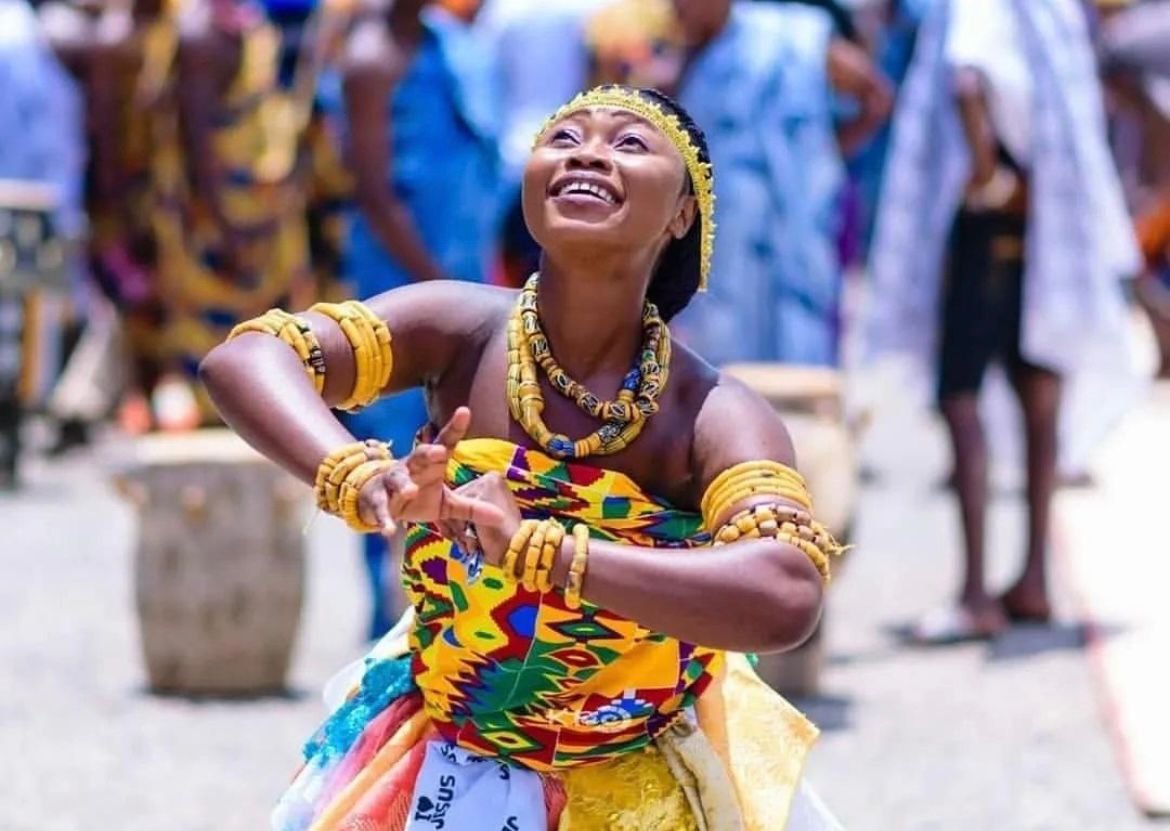
 Ghana is a nation celebrated for its warmth, hospitality, and strong sense of community. Across the country, respect for elders, family values, and pride in cultural heritage remain important aspects of daily life. Although Ghana is home to many ethnic groups, including the Akan, Ga-Dangme, Ewe, Mole-Dagbani, Guan, and others, the people are united by shared values of togetherness, tradition, and mutual respect.
Culture in Ghana is expressed in many beautiful forms. One of the country’s most treasured symbols is kente cloth, a handwoven fabric admired for its vibrant colors and intricate patterns. Traditionally associated with royalty and special occasions, each kente design carries a unique message and reflects themes such as wisdom, courage, leadership, and unity. Equally significant are the Adinkra symbols, which can be found on clothing, artwork, jewelry, and buildings. These symbols represent proverbs, philosophies, and moral values that have been passed down through generations.
Traditional leadership remains an important pillar of Ghanaian society. Chiefs, queen mothers, and elders continue to serve as custodians of culture and history, preserving customs and leading festivals and community ceremonies that strengthen social bonds and keep traditions alive.
Music is at the heart of Ghanaian life and serves as a powerful expression of identity and community. It accompanies festivals, ceremonies, storytelling, and social gatherings, bringing people together across generations. Traditional Ghanaian music is characterized by energetic drumming, call-and-response singing, and cultural dances such as Adowa and Kpanlogo.
In many communities, drums are not simply instruments of entertainment but also instruments of communication. Through distinct rhythms and beats, drummers can announce important events, share messages, and preserve historical narratives. This unique relationship between music and language demonstrates the richness and depth of Ghana’s cultural traditions.
Ghana’s contemporary music scene is equally vibrant. Highlife, which blends indigenous rhythms with jazz and Western influences, became a defining sound during the independence era. Hiplife later emerged by combining hip-hop with local languages such as Twi and Ewe, creating a genre that resonated strongly with the youth. Today, Afrobeats and gospel music dominate the airwaves, with artists such as Sarkodie, Black Sherif, and Gyakie gaining international recognition while proudly celebrating their Ghanaian roots.
Food is another important expression of Ghanaian culture and hospitality. Meals are often enjoyed communally and symbolize friendship, family, and togetherness. Ghanaian cuisine is built around locally grown ingredients such as cassava, yam, plantain, maize, rice, and fish, producing dishes that are rich, flavorful, and satisfying.
Some of the country’s most beloved dishes include jollof rice, a spicy tomato-based rice meal enjoyed across the nation, and waakye, a popular combination of rice and beans served with accompaniments such as fried plantain, eggs, fish, and spicy sauces. Fufu, made from cassava and plantain, is commonly paired with soups such as light soup, groundnut soup, and palm nut soup. Along the coast, banku and grilled tilapia served with hot pepper sauce remain a favorite delicacy, while kenkey, a fermented corn dish traditionally wrapped in husks and served with fried fish and shito, continues to be a staple in many households.
Ghana is also one of the world’s leading producers of premium cocoa, supplying high-quality cocoa beans that contribute to chocolate production worldwide.
From its colorful traditions and rhythmic melodies to its delicious cuisine and warm hospitality, Ghana offers a cultural experience that is both vibrant and unforgettable. The country’s culture, music, and food are not merely aspects of daily life—they are living expressions of Ghana’s identity, heritage, and enduring spirit.